Preconstruction — the phase where projects are estimated, planned, and prepared before breaking ground — has become the hottest area for AI investment in the construction industry. In Q4 2025 alone, six AI-assisted planning, procurement, and scheduling startups raised a combined $124.5M. The message from investors is clear: the front end of construction is where AI can have the biggest impact.
For AEC firms trying to make sense of this rapidly evolving landscape, here is what you need to know about where AI-powered preconstruction stands today and where it is heading.
Why Preconstruction?
Preconstruction is disproportionately important relative to the time it occupies in a project's lifecycle. The decisions made during preconstruction — about design approach, material selection, cost estimates, and construction sequence — lock in the majority of a project's cost and schedule outcomes. Research consistently shows that changes made during preconstruction cost a fraction of changes made during construction.
Yet preconstruction has been one of the most manual phases of the project lifecycle. Estimators spend weeks on quantity takeoffs. Designers manually check drawings against codes and standards. Project planners build schedules based on experience and rules of thumb. Bid packages are assembled by hand from drawings and specifications.
This combination — high impact and high manual effort — makes preconstruction an ideal target for AI.
Where AI Is Making an Impact
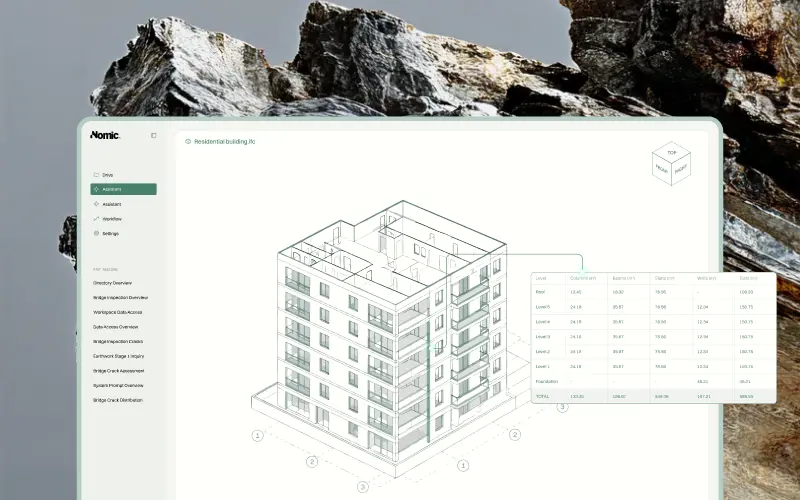
Automated takeoffs and estimating. Companies like Bobyard, Attentive.ai, and XBuild are building AI systems that can extract quantities from drawings and generate cost estimates in a fraction of the time required for manual takeoffs. Early users report doubling their estimating capacity while maintaining accuracy — a transformative improvement for firms that compete on their ability to bid quickly and accurately.
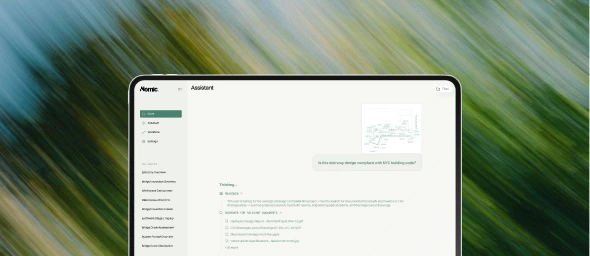
Design review and compliance. Automated drawing review catches errors and code compliance issues before they become expensive field problems. Firms using these tools report 10-35x ROI from issues caught before construction, and significantly faster review cycles that keep projects on schedule.
Submittal and RFI automation. AI agents can perform first-pass submittal review, cross-referencing submitted products against specifications and flagging deviations. Similarly, AI can draft RFI responses by searching project documents for relevant information, reducing the turnaround time for these critical communications.
Preconstruction planning. Newer entrants like LeanCon and Unlimited Industries are tackling the planning phase itself — using AI to generate construction plans, evaluate alternatives, and optimize project approaches based on historical data and project parameters.
What Makes AEC AI Different
The preconstruction AI tools that are gaining traction share several characteristics that distinguish them from generic AI applications:
Domain-specific models. They use AI models trained on construction data — drawings, specifications, codes, and project documents — rather than relying solely on general-purpose models. This domain training is what enables them to accurately parse construction drawings, understand AEC terminology, and produce outputs that professionals trust.
Multimodal processing. Construction preconstruction involves a mix of visual documents (drawings, diagrams) and text documents (specifications, codes, RFIs). Effective AI tools process both modalities, maintaining the connections between them.
Human-in-the-loop design. The most successful tools are designed to augment human professionals, not replace them. They handle the routine, time-intensive tasks and surface findings for expert review, rather than making autonomous decisions on complex judgment calls.
Implications for Firms
The rapid development of AI-powered preconstruction tools has several implications for AEC firms:
Competitive advantage is shifting. Firms that adopt AI preconstruction tools can bid more projects, bid more accurately, and catch more issues before construction. As adoption increases, these advantages will become table stakes rather than differentiators.
Team structures will evolve. As AI handles more of the routine preconstruction work, the role of estimators, reviewers, and planners will shift toward higher-value judgment work. Firms should be thinking about how to upskill their teams for this transition.
Data becomes strategic. AI preconstruction tools are more effective when they have access to a firm's historical project data — past estimates, previous drawing sets, completed project records. Firms with well-organized historical data will get more value from these tools.
Getting Started
The preconstruction AI landscape is evolving quickly, but firms do not need to wait for it to stabilize before getting started. The fundamentals are clear: start with the workflow that consumes the most time or generates the most errors, select a tool purpose-built for AEC, and measure the impact on turnaround time, accuracy, and team capacity.
At Nomic, we provide the platform that powers several of these preconstruction workflows — from automated drawing review to code compliance checking to project research. Book a demo to see how AI can transform your preconstruction workflows.