Preconstruction teams operate under a structural constraint that is unlikely to improve through hiring alone: bid deadlines compress regardless of team size, bid packages keep growing in complexity, and the research required to bid responsibly does not get shorter just because the deadline is tight.
The teams that are finding competitive advantage from AI are not necessarily larger. They are faster at the document research that precedes pricing — understanding scope, identifying risk, and finding comparable past project experience before putting a number together.
The Real Time Cost of Bid Preparation
Preconstruction bid preparation is often described as an estimating problem, but most of the time cost in a competitive bid is actually a research problem. Before an estimator can price a project, someone needs to understand what is in the bid documents — the full scope of work across hundreds of drawings and thousands of specification pages, the owner conditions and special requirements buried in Division 01, the coordination complexities that will affect labor productivity, and the specification standards that define what can and cannot be substituted.
This research takes time. On a complex commercial project, a thorough bid document review can take a senior preconstruction manager several days. On projects where the bid window is two weeks, that leaves limited time for the actual pricing work. Teams that can compress the research phase have more time to price, more time to develop the proposal, and more time to identify value engineering opportunities before bid day.
AI Bid Package Research in Practice
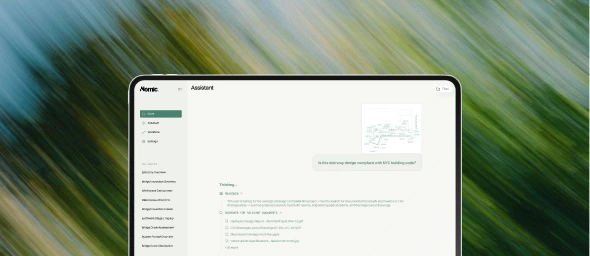
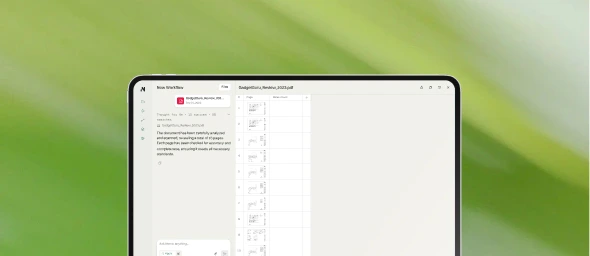
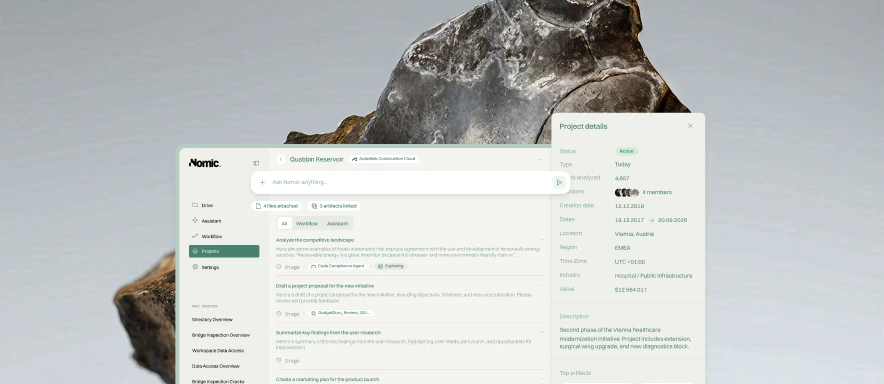
AI bid preparation tools for preconstruction work by indexing bid drawings and specifications and making them queryable by content. Instead of reading the full spec book to find material requirements, a preconstruction team member can ask specific questions and get cited answers from the indexed documents.
What does the spec require for concrete mix design on the parking structure? Which sections have unusual testing or inspection requirements that will affect subcontractor pricing? Are there owner conditions in Division 01 that affect overhead or require special procedures? These are questions that used to require reading specific spec sections manually. AI tools that index the spec book by content can answer them in seconds with cited references.
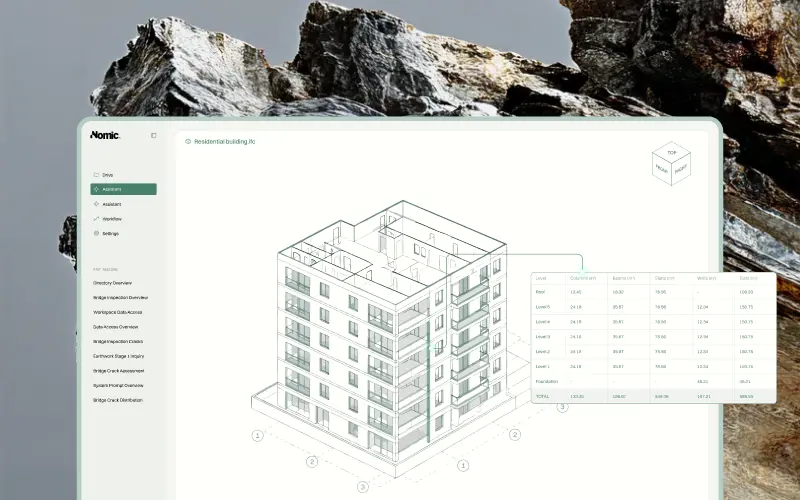
The same applies to drawings. Coordination questions — does the structural system create any constraints for MEP routing that will affect rough-in costs? — that used to require a senior engineer’s time to assess can be surfaced quickly through AI document search, flagged for further review, or used to generate specific pre-bid RFIs that protect the team’s pricing.
Pre-Bid RFI Identification
One of the most valuable preconstruction activities is identifying the right RFIs before bid day. Ambiguities in bid documents represent scope risk — if the design team clarifies an ambiguity after bid day in a way that expands scope, the team that did not identify it carries the risk alone.
AI RFI identification for preconstruction helps teams surface bid document ambiguities, specification conflicts, and coordination gaps systematically rather than relying on whichever staff member happens to notice something during a rushed bid review. The output is a list of pre-bid RFI candidates that the preconstruction team can evaluate, prioritize, and submit before the deadline.
Teams that submit better-targeted pre-bid RFIs get clearer bid clarifications, carry less unidentified scope risk, and in competitive situations sometimes use the quality of their RFIs to signal to owners that they have done serious due diligence on the project.
Comparable Project Experience
Competitive bids require demonstrating relevant experience, and finding that experience requires searching the firm’s project archive. AI tools that index past project files make this research faster — surfacing comparable projects by building type, scope, or system type from the full project library rather than relying on what the proposal writer happens to remember.
For preconstruction teams that also handle proposal writing, this is directly connected to win rates. Proposals backed by specific, well-cited project experience outperform those with generic capability statements. The research that produces that specific evidence used to take days. With an indexed project archive, it takes hours.
Setting Up the Project Before Construction Starts
Preconstruction is also the right time to set up the project’s AI infrastructure for the construction phase. Submittal review workflows grounded in the project specifications, document search tools indexed to the final bid documents, and RFI research capabilities ready before submittals arrive — these tools are most valuable when they are in place from project day one, not configured midway through construction when the volume is already high.
Teams that invest the setup time during preconstruction find that construction-phase document workflows run faster and with fewer surprises. The document research that slows projects down during construction has already been partially done — the project team knows where to find information, and the AI tools know what the project documents contain.