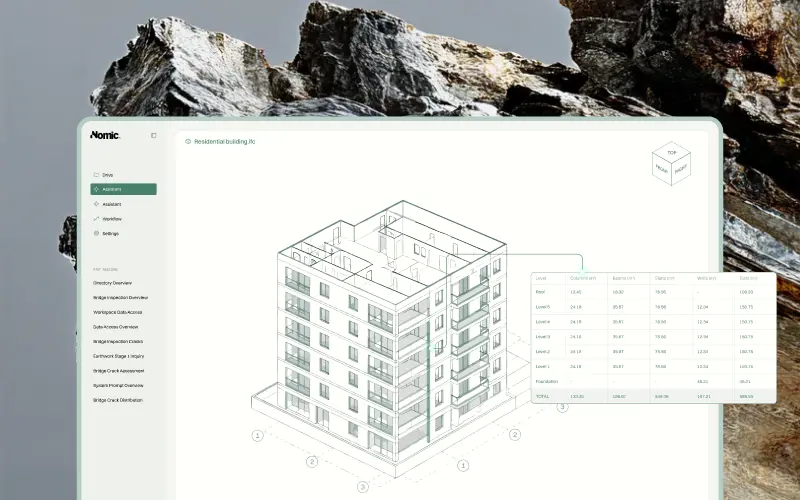
General contractors operate in a document-heavy environment that only gets heavier as projects grow in complexity. Drawing sets, specifications, submittals, RFIs, meeting minutes, addenda — the volume of documents that project teams need to read, reference, and cross-reference to manage a commercial construction project can run into the tens of thousands of files.
The bottleneck is not usually the absence of information. It is the time required to find the right information at the right moment. A project engineer answering an RFI needs the relevant spec section in three minutes, not three hours. A superintendent trying to verify a coordination point needs the right drawing detail now, not tomorrow morning. AI tools that can search project documents by content are starting to close this gap for GC project teams.
Drawing Review Before Construction Starts
One of the highest-value activities a GC can do in preconstruction is a thorough drawing review. Coordination problems caught before mobilization cost almost nothing to resolve. The same problems caught during construction generate RFIs, delays, and in some cases costly rework that affects both budget and schedule.
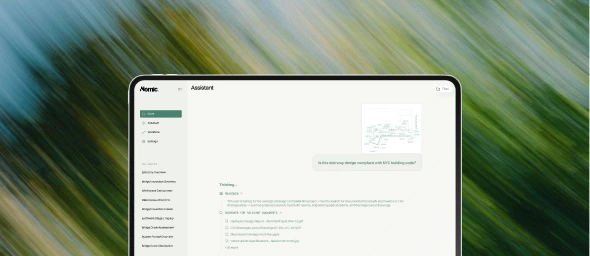
AI drawing review for construction teams supports this process by reading the full drawing set — architectural, structural, MEP, civil — and organizing coordination issues, completeness gaps, and cross-sheet inconsistencies into a reviewable findings list. GC project managers and VDC teams can start their drawing review from a structured issue queue rather than building that queue manually from scratch.
The most common finding categories that matter most to GCs are: coordination conflicts that will generate field RFIs, missing details that will require design team clarification during construction, and cross-discipline dimension mismatches that affect layout and rough-in. These are predictable in pattern even if they vary in specifics across projects.
Submittal Review: Clearing the Backlog
GC submittal coordinators manage a high-volume workflow that requires careful tracking and routing. Submittals that arrive incomplete, non-conforming, or poorly organized slow down the review cycle and delay contractor approvals that affect schedule.
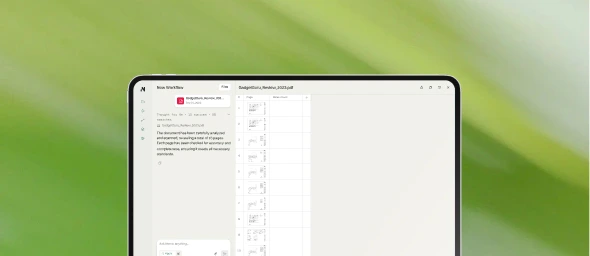
AI submittal review for general contractors provides two types of support. First, completeness checks before routing to the design team — catching obviously incomplete packages before they reach architects and engineers who will return them immediately anyway. Second, spec cross-reference during the GC’s own review — comparing submitted product data against the project specifications to surface deviations that the GC should flag or resolve before routing.
This does not replace the design team’s review. It makes the GC’s workflow faster and the submittals that reach the design team more complete — which in turn makes design team review faster and reduces the back-and-forth that stretches approval timelines.
RFI Management: Research in Minutes, Not Hours
RFI management is where document research speed has the most direct impact on construction schedule. An RFI that takes a week to get a design team response while work is on hold is a project schedule problem. An RFI that moves in two days keeps the work moving.
GCs typically route RFIs to the design team, but before routing they need to verify that the answer is not already in the project documents — that it is a genuine ambiguity requiring design team input rather than a question that the specs or drawings already answer. That research step currently takes time that busy project engineers do not always have.
AI RFI management for construction teams compresses the research step. A project engineer can query the indexed project document set and get cited results — spec section, sheet reference, drawing location — in minutes. If the answer is in the documents, the RFI either gets resolved or gets a much more specific question routed to the design team. Either way, the cycle time goes down.
Project Document Search Across the Whole Set
Beyond RFIs and submittals, GC project teams constantly need to find specific information across a growing project document set. Subcontractors call with scope questions. Owners ask about design decisions from six months ago. The project team needs to verify what a prior meeting minute actually said.
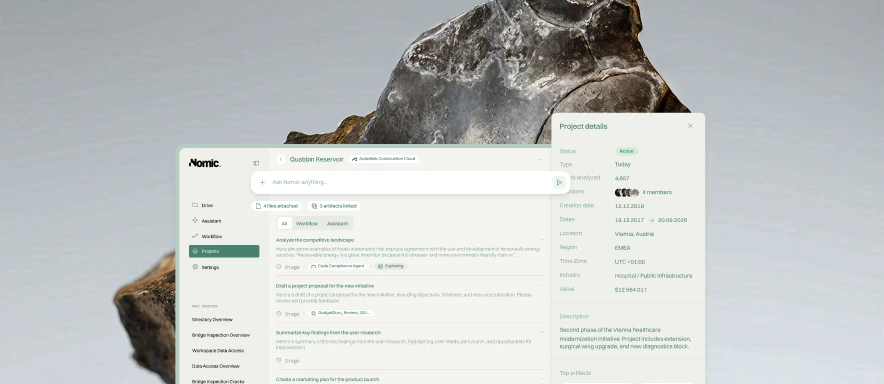
AI document search tools for construction make this possible without manual file navigation. Any member of the project team can ask a question and get a cited answer from the project document record. The information does not need to be in someone’s memory; it needs to be in the indexed document set.
This represents a meaningful shift in how GC project teams manage information — from a model where information access depends on who you know and what they remember, to a model where the project document record is directly queryable by anyone on the team.