Every established AEC firm sits on a goldmine of institutional knowledge. Thousands of completed projects. Millions of drawing sheets. Decades of design decisions, structural solutions, and construction details refined through real-world experience. This knowledge represents an enormous competitive advantage — in theory.
In practice, most of this knowledge is effectively inaccessible. It lives in disconnected file servers, archived project folders, legacy document management systems, and the memories of senior staff who may or may not still be with the firm. When a designer needs a detail they know was solved on a previous project, they face a familiar frustration: they know it exists somewhere, but finding it is often harder than recreating it from scratch.
The Data Silo Problem
AEC firms accumulate data across multiple platforms and storage locations:
Cloud storage — SharePoint, Google Drive, Egnyte, Box — where active project files live, often with inconsistent folder structures across project teams.
Construction management platforms — Autodesk Construction Cloud, Procore, Bentley ProjectWise — where project documents are exchanged with collaborators but rarely searched across projects.
Local and on-premise servers — where archived projects often end up, accessible only to those who know the folder path and have network access.
Email — where critical project decisions, RFI responses, and design rationale are discussed and then effectively lost to future teams.
Each of these systems has its own search — and each search only covers its own silo. There is no way to ask a question across all of a firm's knowledge and get a meaningful answer.
What Gets Lost
The consequences of fragmented knowledge extend well beyond the inconvenience of not finding a detail:
Reinvention. Teams spend hours recreating details and solutions that already exist in the firm's archives. A structural engineer developing a connection detail for a steel moment frame may not know that a colleague solved an identical condition two years ago on a different project.
Inconsistency. Without easy access to firm standards and precedents, different teams develop different approaches to similar problems. This leads to inconsistent quality and missed opportunities to apply lessons learned.
Knowledge attrition. When senior staff retire or leave, their project knowledge leaves with them. The firm's institutional memory degrades over time, making each generation of designers slightly less efficient than the last.
Onboarding friction. New hires have no efficient way to learn from the firm's body of work. They cannot search for how the firm has previously handled similar project types, building systems, or site conditions.
AI-Powered Firm-Wide Search
The missing piece has been AI that can understand AEC content well enough to make it searchable. General-purpose search and document management systems treat construction drawings as opaque files — they can search filenames and metadata, but not the actual content of the documents.
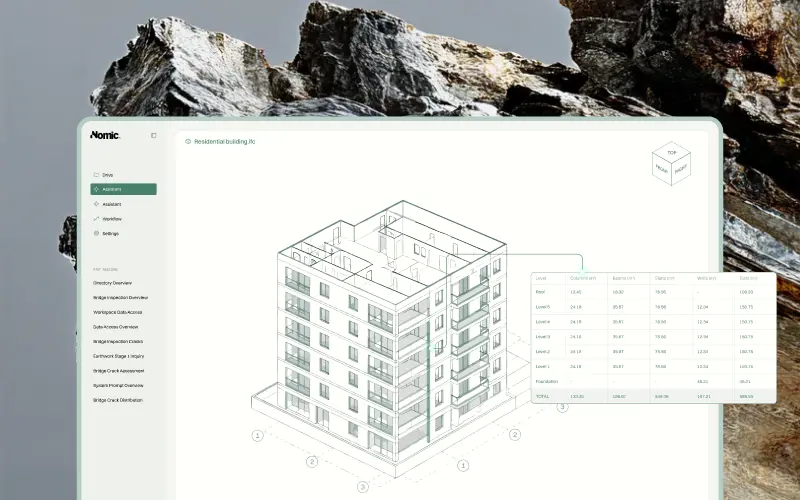
Domain-specific AI changes this equation. Models trained on AEC data can parse construction drawings, understand their content, and create searchable representations of the information they contain. Combined with multimodal embeddings that can process both text documents and visual content, this enables a new kind of search across a firm's entire knowledge base.
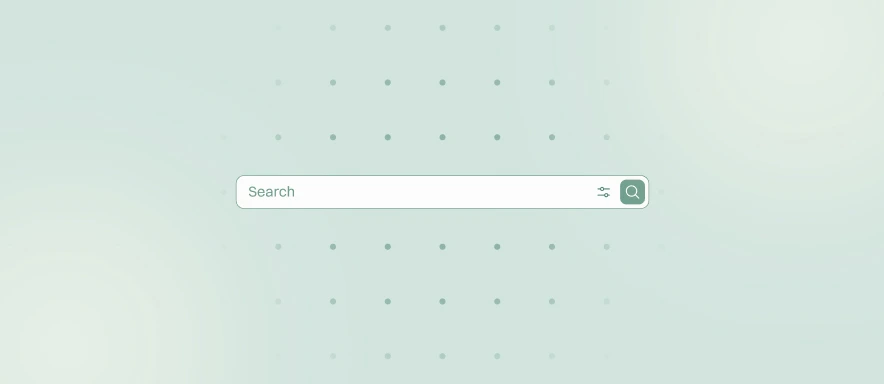
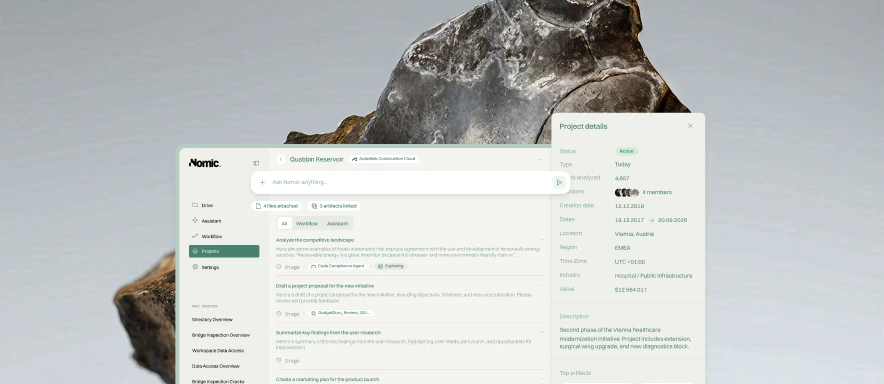
At Nomic, our firm-wide detail search connects to your data where it lives — SharePoint, Google Drive, Egnyte, or on-premise servers — and makes it searchable with visual, AI-powered search. A designer can search for "precast concrete panel connection detail" and find relevant details across all of the firm's projects, regardless of where the files are stored or how they were named.
From Search to Intelligence
Search is the foundation, but the real value comes from what it enables. When a firm's knowledge is searchable, it becomes possible to:
Identify patterns across projects — which details perform well, which generate the most RFIs, which are most frequently revised. Answer questions about firm experience — "Have we designed a hospital in the last five years?" or "What structural systems have we used for buildings over 20 stories?" Accelerate proposals and qualifications by quickly surfacing relevant project experience.
The firms that unlock their institutional knowledge will design faster, with fewer errors, and with the accumulated wisdom of every project they have ever completed.