Building codes are the invisible infrastructure of the built world. Every structure — from a single-family home to a data center — must comply with a web of codes and standards that govern structural integrity, fire safety, accessibility, energy performance, and more. In the United States alone, there are hundreds of code documents across dozens of jurisdictions, each with their own adoption schedules, amendments, and interpretations.
For the professionals responsible for compliance — architects, engineers, code consultants, and building officials — navigating this landscape has traditionally been a manual, time-intensive process. But AI is beginning to change that in meaningful ways.
The Scale of the Challenge
Consider what a code compliance check actually involves. A designer working on a commercial building in New York City needs to check their drawings against the NYC Building Code (based on the 2014 edition of the International Building Code with local amendments), the NYC Energy Conservation Code, the NYC Fire Code, ADA accessibility requirements, and potentially dozens of referenced standards from organizations like NFPA, ASHRAE, and ACI.
Each of these documents runs hundreds of pages. The applicable requirements depend on the building's construction type, occupancy classification, height, area, and location. And the requirements interact — a fire separation that satisfies the building code may need to be coordinated with the structural design, the mechanical systems, and the accessibility provisions.
Experienced professionals develop deep familiarity with the codes they work with regularly. But even experts spend significant time looking up specific requirements, cross-referencing between code sections, and verifying that their designs comply with the latest adopted provisions.
Where AI Adds Value
AI-powered code compliance is not about replacing the judgment of experienced professionals. It is about augmenting their capabilities in specific, high-value ways:
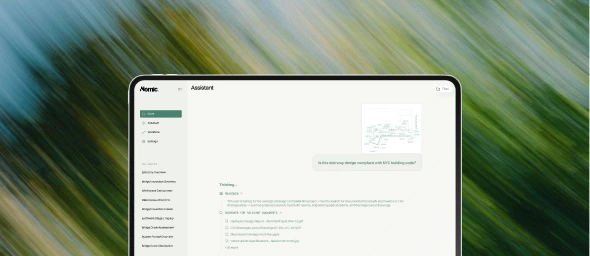
Natural language code queries. Instead of manually searching through code documents, professionals can ask questions in natural language — "What is the maximum travel distance to an exit for a B-occupancy building with sprinklers?" — and get cited answers from the applicable code. This alone can save hours of lookup time on complex projects.
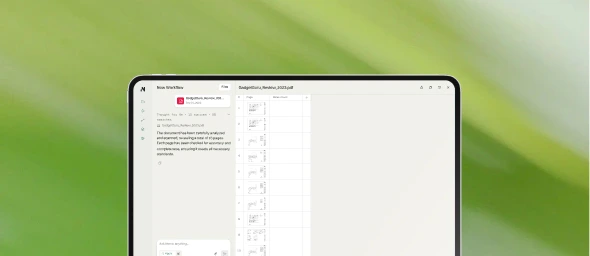
Automated drawing checks. AI systems trained on construction documents can identify elements in drawings — doors, corridors, stairs, fire-rated assemblies — and check them against code requirements. This catches issues early, before they become expensive field problems.
Cross-code coordination. Many compliance issues arise at the intersection of different codes — where fire separation requirements interact with structural systems, or where accessibility provisions conflict with egress paths. AI can flag these intersections for review.
Jurisdictional awareness. Different jurisdictions adopt different code editions with different amendments. AI systems can be configured to check against the specific codes applicable to a project's location, rather than requiring the reviewer to manually determine which provisions apply.
The Technology Behind It
Effective AI code compliance requires several technical capabilities working together. The system needs to parse and understand building codes — complex technical documents with nested references, tables, figures, and exceptions. It needs to parse construction drawings to identify the elements being checked. And it needs a retrieval system that can find the right code provisions for a given question or check.
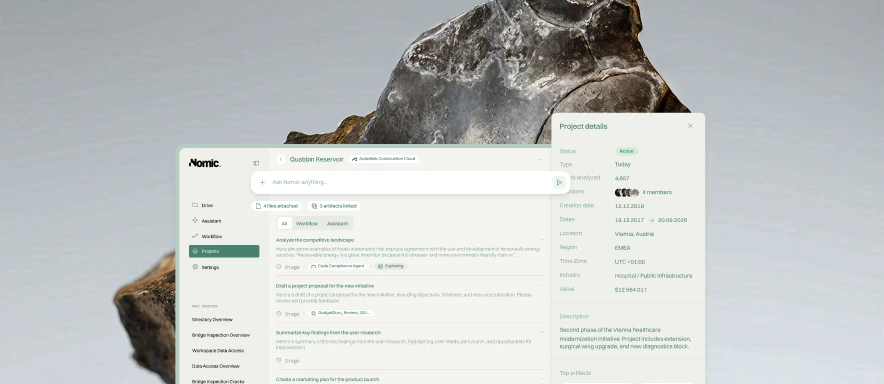
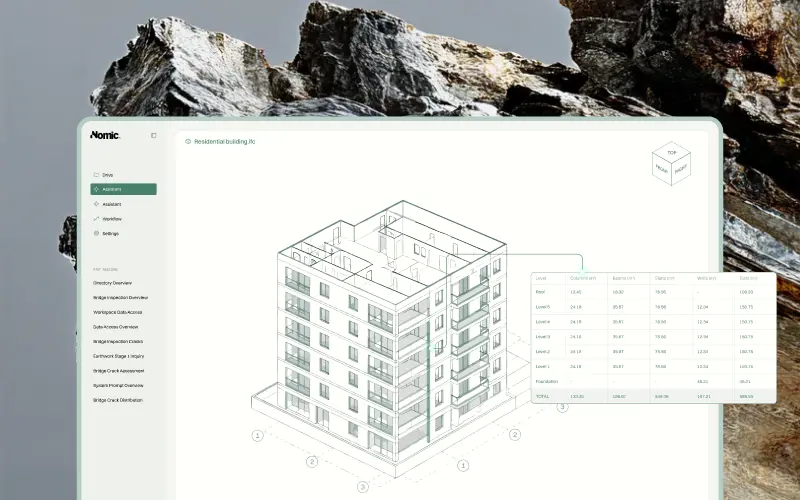
At Nomic, we have built these capabilities using domain-specific models trained on AEC content. Our platform supports over 380 building codes and standards, and can check drawings against the codes applicable to a project's jurisdiction. The result is not a pass/fail report, but a detailed analysis with cited code references that professionals can review and act on.
Looking Ahead
Code compliance is becoming an AI product category. The investment flowing into this space — from PermitFlow's $54M raise to UpCodes' Copilot Intelligence to Nomic's own platform — reflects a growing recognition that the manual compliance workflow is unsustainable as codes become more complex and project timelines compress.
The firms that adopt AI-powered compliance tools will be able to catch issues earlier, reduce rework costs, and deliver projects with greater confidence in their code compliance. The technology is here. The question is who will adopt it first.